
Conduit fill calculations may seem simple, but small mistakes can create big problems. Choosing the wrong conduit size, counting conductors incorrectly, or using the wrong wire data can lead to failed inspections, difficult wire pulls, and extra project costs. These errors are common among beginners, but experienced electricians can make them too when working quickly or relying on memory.
The good news is that most conduit fill mistakes are easy to avoid. By understanding the calculation process and checking your work before installation, you can improve safety and stay compliant with the National Electrical Code (NEC).
If you are new to conduit fill, it helps to first understand the basics. Our guide on What Is Conduit Fill explains why conduit fill matters and how it affects electrical installations.
What Is a Conduit Fill Calculation?

A conduit fill calculation determines how much space electrical conductors occupy inside a conduit. The NEC limits the amount of space that wires can take up because packed conductors create more heat and become harder to pull through the conduit.
The calculation compares the total area of all conductors with the available inside area of the conduit. If the conductor area exceeds the allowed percentage, the conduit is considered overfilled.
The allowable fill percentage depends on the number of conductors installed. A single conductor has a higher fill limit than multiple conductors because there is more room for heat to escape and less friction during installation.
Using the correct conduit size helps protect conductor insulation, improves airflow, and makes future maintenance much easier.
Why Conduit Fill Mistakes Cause Inspection Failures
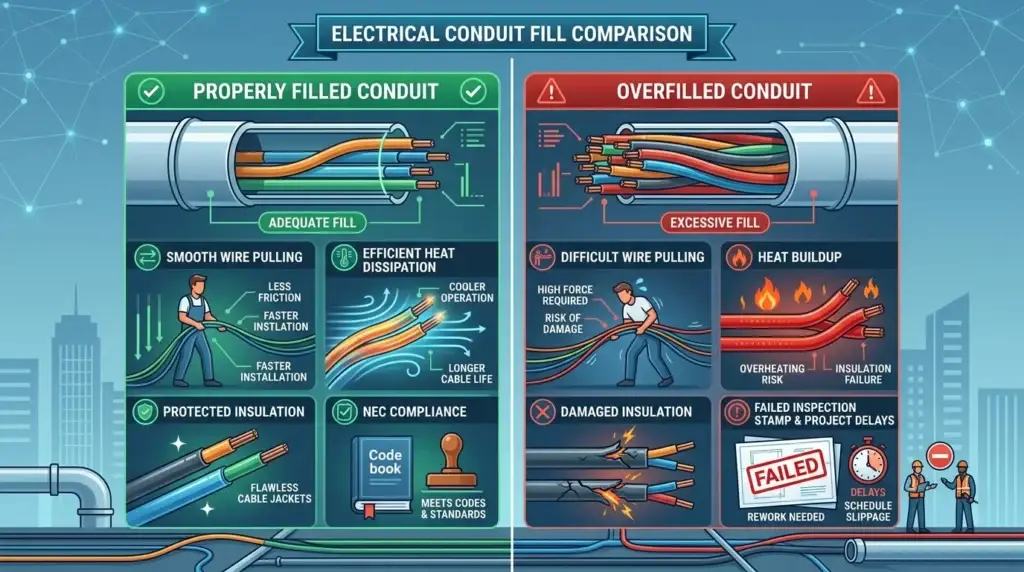
Electrical inspectors check more than whether wires fit inside a conduit. They verify that the installation follows NEC requirements and that the conduit size matches the number and type of conductors being installed.
When a conduit is overfilled, pulling wires becomes difficult. Extra force can damage conductor insulation, creating hidden problems that may not appear until later. Overfilled conduits can also increase heat buildup, reducing the overall safety of the electrical system.
Inspection failures often happen because the conduit was selected before the calculations were completed. Instead of choosing a conduit first and hoping everything fits, it is always better to calculate the required fill before purchasing materials.
Using the Wrong Conduit Type
One of the most common conduit fill calculation mistakes is selecting the wrong conduit type.
EMT, PVC, IMC, and RMC may share the same trade size, but they do not always have the same internal dimensions. A one-inch EMT conduit does not necessarily provide the same usable area as a one-inch PVC conduit.
If you select the wrong conduit type during your calculations, the available fill area changes. This can produce an incorrect result and may cause the installation to fail inspection even though the math appears correct.
Always confirm the conduit material before calculating conduit fill.
Choosing the Wrong Conduit Size
Many people confuse trade size with the actual inside diameter of a conduit.
Trade size is only a standard naming system. The internal area used for conduit fill calculations comes from NEC tables, not from the trade size alone.
Selecting a smaller conduit than required may save space during planning, but it often creates installation problems. Wires become harder to pull, friction increases, and inspectors may reject the installation.
Always verify the trade size and use the correct internal area for the selected conduit.
Forgetting That Wire Insulation Changes the Area
Wire insulation plays an important role in conduit fill calculations.
Two conductors with the same wire gauge can occupy different amounts of space if they use different insulation types. For example, THHN and XHHW conductors do not have identical overall dimensions.
Some installers focus only on the conductor size and forget that insulation also affects the total area.
Before calculating conduit fill, confirm both the wire gauge and the insulation type to avoid incorrect results.
Using Wire Diameter Instead of Wire Area
Another common mistake is using wire diameter instead of conductor area.
Conduit fill calculations are based on cross-sectional area rather than diameter. Even a small difference in measurement can produce inaccurate results when several conductors are added together.
The NEC provides conductor areas that should be used during calculations. Using these values helps ensure accurate results and reduces the chance of inspection issues.
Counting the Wrong Number of Conductors
Incorrect conductor counts are one of the easiest mistakes to make.
Sometimes installers accidentally leave out a conductor or count one twice. In other cases, equipment grounding conductors are ignored even though they should be included when determining conduit fill according to NEC requirements.
Before starting your calculation, verify every conductor that will be installed inside the conduit. A careful count improves accuracy and prevents costly changes later.
Applying the Wrong NEC Fill Percentage
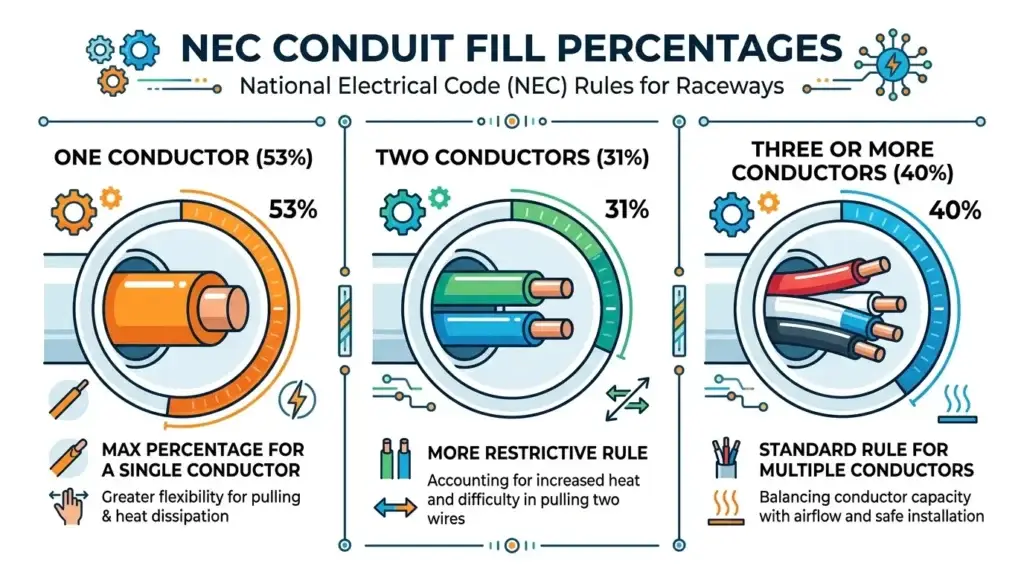
Not every conduit installation follows the same fill percentage.
The NEC allows different fill limits depending on whether the conduit contains one conductor, two conductors, or three or more conductors.
Applying the wrong percentage is a common reason for failed inspections. Even if every conductor has been measured correctly, using the wrong fill limit can produce an incorrect answer.
If you want a simple explanation of these requirements, read our guide on NEC Conduit Fill Rules Explained.
Understanding these limits helps you select the correct conduit size from the beginning.
Mixing Different Wire Sizes Without Proper Calculations
Many conduit installations contain conductors of different sizes.
Instead of multiplying one conductor value by the total number of wires, each conductor size should be calculated individually. After calculating each conductor area, the values are added together to determine the total fill.
Skipping this step often produces inaccurate results, especially in larger commercial installations.
Taking a few extra minutes to calculate each conductor separately can prevent expensive mistakes during inspection.
Ignoring Changes in Conductor Insulation
Electrical products continue to evolve, and different manufacturers may offer conductors with different insulation characteristics.
Using outdated tables or making assumptions based on previous projects can result in incorrect conduit fill calculations.
Whenever possible, use current conductor information and verify the insulation type before completing your calculations.
Keeping your data up to date improves both accuracy and code compliance.
Confusing Conduit Fill With Ampacity Derating
Conduit fill and ampacity derating are related, but they are not the same thing.
Conduit fill determines whether the conductors physically fit inside the conduit while following NEC limits.
Ampacity derating determines whether the conductors can safely carry electrical current when multiple current-carrying conductors are installed together.
Passing a conduit fill calculation does not automatically mean the installation meets ampacity requirements. Both should be checked before beginning the installation.
Understanding the difference helps avoid unexpected inspection problems.
Relying Only on Manual Calculations
Manual calculations can be accurate, but they also create opportunities for human error.
Typing the wrong value, using the wrong conductor area, or selecting an incorrect conduit size can quickly produce inaccurate results.
Even experienced electricians benefit from checking their calculations before pulling wires.
A second review often catches mistakes that were missed during the first calculation.
Simple Ways to Avoid Conduit Fill Calculation Mistakes
The easiest way to avoid conduit fill mistakes is to slow down and verify every part of the calculation.
Start by confirming the conduit type and trade size. Next, check the wire gauge and insulation type. Count every conductor carefully and apply the correct NEC fill percentage.
Instead of estimating, always use official conductor data and approved conduit dimensions.
If you are learning the process, our How to Calculate Conduit Fill Step by Step guide walks through the calculation in simple English and shows each stage clearly.
Following the same process every time reduces errors and builds confidence.
How a Conduit Fill Calculator Helps Prevent Inspection Failures
A conduit fill calculator removes much of the guesswork from the calculation process.
Instead of performing several manual calculations, you can enter the conduit type, conduit size, wire gauge, insulation type, and conductor quantity. The calculator determines the fill percentage and helps identify whether the selected conduit meets NEC requirements.
This not only saves time but also reduces the chance of mathematical errors.
Our Conduit Fill Calculator is designed to make this process faster and easier for electricians, apprentices, contractors, and anyone planning an electrical installation.
Using a reliable calculator before purchasing materials or pulling wires helps reduce rework and increases confidence during inspections.
Quick Inspection Checklist Before Pulling Wire
Before starting the installation, take a few minutes to review your work.
- Confirm the correct conduit type.
- Verify the trade size.
- Check every conductor size.
- Confirm the insulation type.
- Count all conductors accurately.
- Apply the correct NEC fill percentage.
- Review the final calculation before installation.
A simple review can prevent mistakes that might otherwise delay your project.
Final Thoughts
Most conduit fill calculation mistakes happen because of small oversights rather than difficult math. Choosing the wrong conduit type, using incorrect conductor data, forgetting insulation differences, or applying the wrong NEC fill percentage can all lead to failed inspections.
The best approach is to calculate carefully, verify every value, and review the results before installing conductors. Taking these steps helps improve safety, supports NEC compliance, and reduces costly project delays.
Whether you are an apprentice learning conduit fill or an experienced electrician working on a complex installation, using accurate calculations and reliable tools will help you complete the job correctly the first time.