
Choosing the right electrical conduit is one of the most important decisions in any wiring project. The conduit protects electrical wires from damage, moisture, and environmental hazards while helping your installation meet electrical code requirements. Two of the most common options are EMT conduit and PVC conduit.
But which one is the better choice?
The answer depends on where you plan to install it, your budget, the environment, and the level of protection you need. Both conduit types have strengths and limitations, so understanding their differences can help you make the right decision.
In this guide, you’ll learn how EMT and PVC conduit compare in terms of durability, cost, installation, maintenance, and conduit fill requirements.
What Is EMT Conduit?
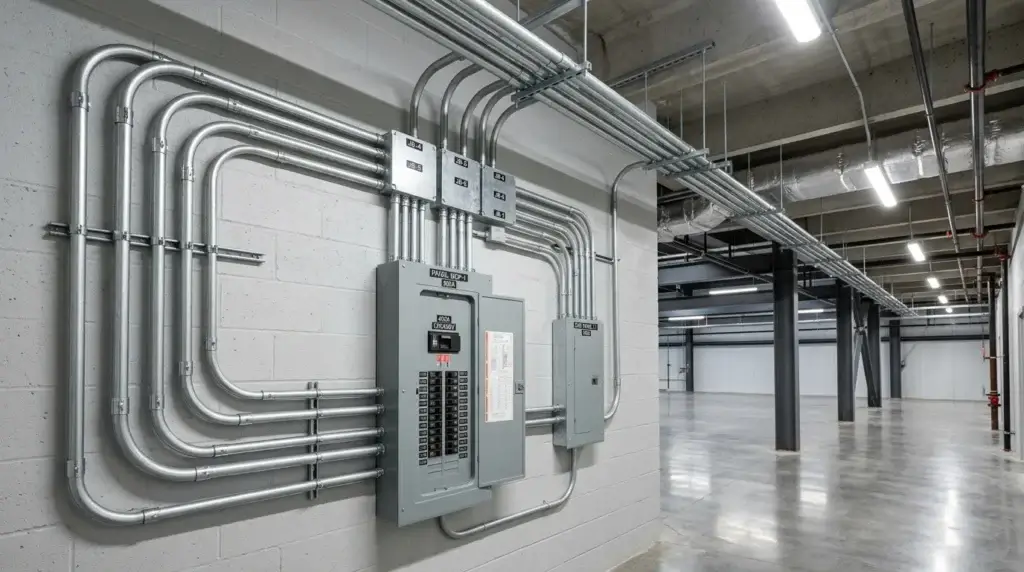
EMT stands for Electrical Metallic Tubing. It is a thin-wall metal conduit usually made from galvanized steel or aluminum. EMT is widely used in commercial buildings, garages, warehouses, schools, and indoor electrical systems because it provides strong mechanical protection while remaining lighter than rigid metal conduit.
Common Applications of EMT
EMT is commonly installed in:
- Commercial buildings
- Office spaces
- Garages
- Basements
- Warehouses
- Exposed indoor wiring
- Industrial facilities
Advantages of EMT
EMT offers several benefits.
- Strong protection against impact
- Can serve as the equipment grounding path when properly installed
- Lightweight compared to rigid metal conduit
- Professional appearance for exposed wiring
- Easy to bend with the proper tools
- Long service life in dry environments
Disadvantages of EMT
Despite its advantages, EMT also has some drawbacks.
- Higher material cost than PVC
- Requires conduit benders and special fittings
- Can corrode if used in harsh environments without protection
- Not commonly used for direct burial
What Is PVC Conduit?
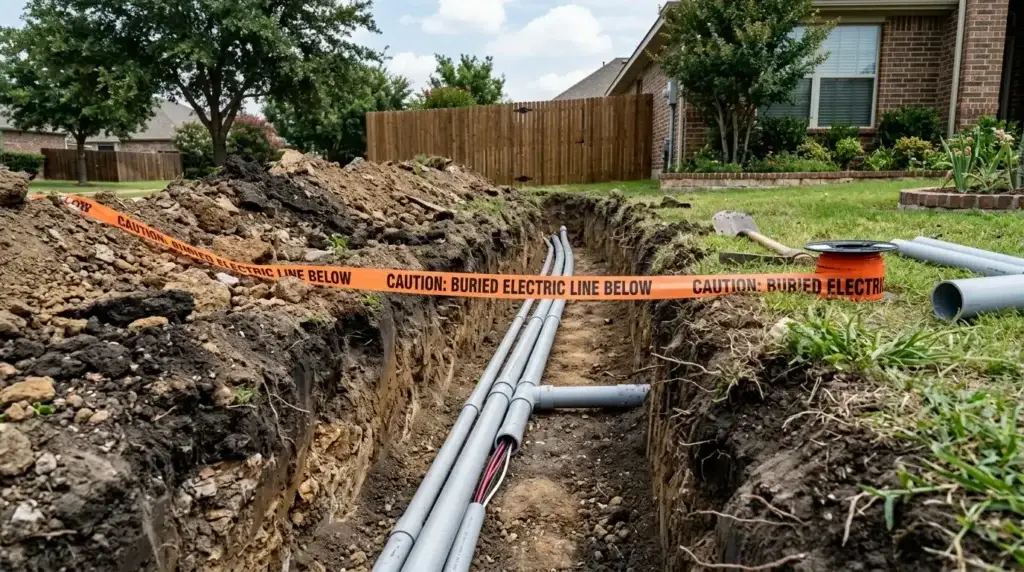
PVC conduit is made from durable plastic called polyvinyl chloride. It is lightweight, affordable, and highly resistant to moisture and corrosion. Because it does not rust, PVC is commonly used outdoors, underground, and in wet locations.
The two most common types are:
- Schedule 40 PVC
- Schedule 80 PVC
Schedule 80 has thicker walls and provides greater protection where physical damage is more likely.
Common Applications of PVC
PVC conduit is widely used for:
- Underground electrical wiring
- Outdoor installations
- Wet locations
- Agricultural buildings
- Residential projects
- Corrosive environments
Advantages of PVC
PVC has many practical benefits.
- Lower cost
- Rust-proof
- Waterproof
- Lightweight
- Easy to cut
- Simple installation using solvent cement
- Excellent corrosion resistance
Disadvantages of PVC
PVC also has limitations.
- Less impact resistant than EMT
- Expands and contracts with temperature changes
- Requires glue and curing time
- Cannot provide a grounding path by itself
EMT vs PVC Conduit: Quick Comparison
| Feature | EMT | PVC |
|---|---|---|
| Material | Galvanized steel or aluminum | Plastic |
| Cost | Higher | Lower |
| Weight | Moderate | Lightweight |
| Corrosion Resistance | Good | Excellent |
| Grounding | Yes | No |
| Underground Use | Limited | Excellent |
| Indoor Use | Excellent | Good |
| Outdoor Use | Good | Excellent |
| Installation | Moderate | Easy |
| Durability | High | Moderate to High |
| Rust Resistance | Moderate | Excellent |
| Fire Resistance | Better | Lower |
EMT vs PVC Conduit: Key Differences
Material
The biggest difference is the material itself.
EMT is made from metal, while PVC is made from plastic. Metal provides greater mechanical strength, while plastic offers excellent corrosion resistance.
Strength
EMT is much stronger against physical damage. It can withstand accidental impacts that could crack plastic conduit.
PVC is durable but may crack if struck hard, especially in very cold weather.
Corrosion Resistance
PVC clearly wins in wet or corrosive environments.
Since plastic does not rust, it performs well underground and near water. EMT is galvanized to resist corrosion, but prolonged exposure to moisture may eventually affect it if not properly protected.
Cost
PVC generally costs less than EMT.
It is also less expensive to transport because it is lightweight. Installation costs are often lower since PVC requires fewer specialized tools.
Installation Difficulty
PVC is easier for beginners.
You simply cut the conduit and join the sections with primer and solvent cement.
EMT requires measuring, bending, and installing metal fittings correctly. This usually takes more experience.
Electrical Grounding
One major difference is grounding.
EMT can act as part of the equipment grounding path when installed correctly.
PVC is nonmetallic, so it cannot provide grounding. A separate grounding conductor must normally be installed inside the conduit.
Flexibility
PVC fittings make it easy to change direction, but heating may be required for custom bends.
EMT can be bent into smooth angles using a conduit bender, making it popular for exposed installations.
Which Conduit Lasts Longer?
Both conduit types can last for decades when installed correctly.
EMT performs well indoors where moisture is limited. Many commercial buildings continue using EMT systems for decades with minimal maintenance.
PVC generally lasts longer in wet environments because it cannot rust. It is often the preferred choice for underground installations where moisture is unavoidable.
If corrosion is the biggest concern, PVC usually has the advantage.
Which Is Better for Indoor Wiring?
For most indoor projects, EMT is the preferred option.
It offers better protection from accidental impacts and creates a clean, professional appearance for exposed wiring. Commercial buildings, workshops, and warehouses commonly use EMT because it combines strength with reliable grounding.
PVC can still be used indoors in some situations, but it is usually chosen only when metal conduit is unnecessary.
Which Is Better for Outdoor Wiring?
Outdoor conditions expose conduit to rain, sunlight, humidity, and changing temperatures.
PVC performs extremely well in wet environments because it will not rust. It is commonly used for outdoor electrical systems, landscape lighting, and underground service entrances.
EMT can also be used outdoors when installed according to code, but additional protection may be required in corrosive environments.
Which Is Better for Underground Installations?
PVC is usually the better choice for underground wiring.
It resists moisture, chemicals, and soil conditions much better than metal conduit. Schedule 40 PVC is common for many underground installations, while Schedule 80 is often used where additional protection is needed.
Many electricians transition from underground PVC to EMT once the conduit comes above ground.
EMT vs PVC for Residential Projects
Both conduit types have a place in residential wiring.
Choose EMT when:
- Wiring garages
- Finishing basements
- Protecting exposed wiring
- Installing workshop circuits
Choose PVC when:
- Running underground power
- Installing outdoor lighting
- Wiring garden structures
- Working in wet locations
EMT vs PVC for Commercial Buildings
Commercial buildings often use EMT because it provides strong mechanical protection and creates a neat appearance.
Its ability to serve as part of the grounding system can also simplify some installations when properly installed according to code.
EMT vs PVC for Industrial Applications
Industrial facilities have different needs depending on the environment.
Factories with heavy equipment often use EMT because of its impact resistance.
Facilities exposed to chemicals, moisture, or corrosive materials frequently choose PVC since corrosion is less of a concern.
The installation environment should always guide the final decision.
Does Conduit Type Affect Conduit Fill?
This is a common question.
The conduit material itself does not change the NEC conduit fill percentage. Whether you install EMT or PVC, conduit fill calculations still follow the same code requirements for conductor fill.
However, different conduit types can have different internal dimensions, which affects how many conductors will fit inside a specific trade size. That is why selecting the correct conduit size is just as important as choosing the conduit material.
If you need a quick way to determine the correct conduit size, you can use the Conduit Fill Calculator to calculate conduit fill accurately before starting your installation.
How to Calculate Conduit Fill for EMT and PVC
Calculating conduit fill helps prevent overcrowding and improves safety.
The process is simple.
Step 1: Choose your conduit type.
Step 2: Select the conduit size.
Step 3: Choose the wire size.
Step 4: Enter the number of conductors.
Step 5: Calculate the fill percentage and verify it meets NEC recommendations.
If you want a detailed walkthrough, read our guide on how to calculate conduit fill step by step.
NEC Rules You Should Know
The National Electrical Code limits how much of a conduit can be filled with conductors.
General guidelines include:
- Up to 53% fill for one conductor
- Up to 31% fill for two conductors
- Up to 40% fill for three or more conductors
Exceeding these limits can make wire pulling difficult and increase heat buildup inside the conduit. Following proper conduit fill rules helps improve safety and supports long-term system performance.
It is also helpful to understand how conduit fill differs from box fill. Our article on conduit fill vs box fill explains why both calculations are important during electrical installations.
Common Mistakes When Choosing Between EMT and PVC
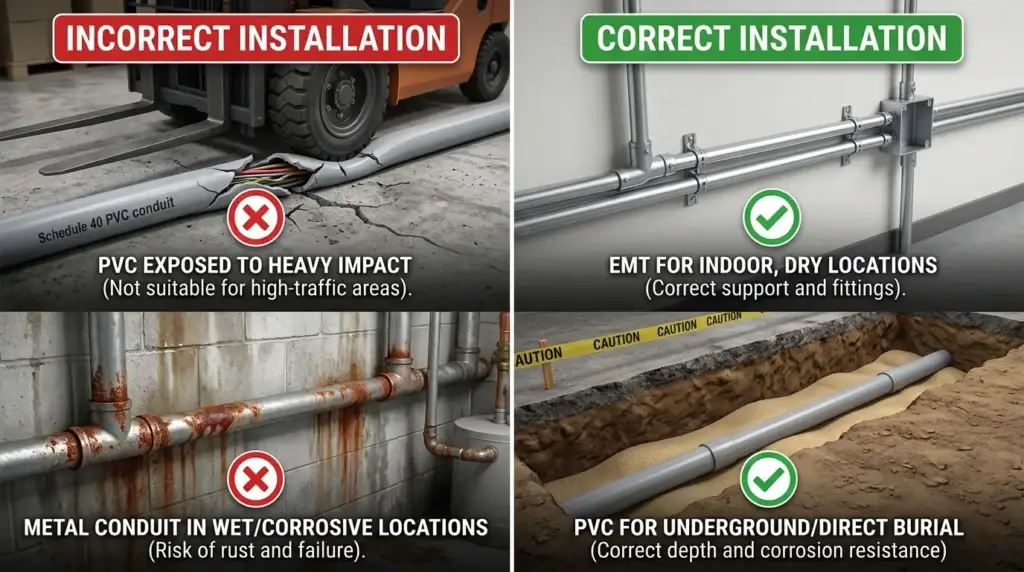
Many installation problems begin with choosing the wrong conduit.
Common mistakes include:
- Using EMT where severe corrosion is expected
- Installing PVC where heavy physical damage is likely
- Forgetting that PVC requires a grounding conductor
- Ignoring conduit fill calculations
- Choosing the wrong conduit size
- Forgetting to account for thermal expansion in long PVC runs
Avoiding these mistakes can save time, money, and future repairs.
When Should You Choose EMT?
EMT is usually the better choice if you need:
- Strong mechanical protection
- Exposed indoor wiring
- Commercial installations
- Professional-looking conduit runs
- Reliable grounding through the conduit system
When Should You Choose PVC?
PVC is often the better choice if you need:
- Underground electrical installations
- Outdoor wiring
- Wet locations
- Corrosion resistance
- A lower-cost solution
EMT vs PVC: Pros and Cons
EMT Pros
- Strong and durable
- Professional appearance
- Supports grounding
- Excellent for exposed indoor wiring
EMT Cons
- Higher cost
- Can corrode
- Requires conduit bending tools
PVC Pros
- Affordable
- Lightweight
- Rust-proof
- Excellent for underground installations
- Easy to install
PVC Cons
- Cannot serve as a grounding path
- Can crack under heavy impact
- Expands and contracts with temperature changes
Final Verdict: EMT or PVC?
There is no single winner because each conduit is designed for different situations.
Choose EMT when you need maximum mechanical protection, clean indoor installations, and dependable grounding.
Choose PVC when your project involves underground wiring, outdoor environments, moisture, or corrosion.
Before purchasing conduit, always consider the installation location, local electrical codes, conduit size, and conductor count. Taking a few extra minutes to plan can prevent costly mistakes later.
Conclusion
The choice between EMT and PVC conduit depends on your project’s environment, budget, and protection requirements. EMT offers excellent strength, durability, and grounding for indoor and commercial applications. PVC stands out for its corrosion resistance, low cost, and outstanding performance in underground and wet locations.
No matter which conduit you choose, selecting the correct conduit size is just as important as selecting the material. Proper conduit fill ensures safer installations, easier wire pulling, and better compliance with electrical codes.
Before beginning your next project, use the Conduit Fill Calculator to verify your conduit sizing and help ensure your installation meets NEC conduit fill recommendations.