
If you’re installing electrical wiring inside a conduit, one of the most important things you need to know is conduit fill. Choosing the correct conduit size helps protect conductors, makes wire pulling easier, and keeps your installation compliant with electrical codes.
Whether you’re an electrician, contractor, engineer, apprentice, or DIY enthusiast, understanding conduit fill is essential for safe and efficient electrical work.
If you need to calculate conduit fill quickly, you can use our free Conduit Fill Calculator.
What Is Conduit Fill?
Conduit fill is the percentage of a conduit’s internal cross-sectional area occupied by electrical conductors. In simple terms, it tells you how much space the wires take up inside the conduit.
Electrical codes limit how much of the conduit can be filled because overfilling creates several problems. It can make wires difficult to install, reduce heat dissipation, damage conductor insulation during pulling, and make future maintenance much harder. The National Electrical Code (NEC) provides maximum conduit fill limits based on the number of conductors installed.
Why Conduit Fill Matters

Calculating conduit fill is not just about passing an inspection. It also improves the safety and reliability of an electrical installation.
Proper conduit fill helps:
- Prevent conductor overheating
- Protect insulation during installation
- Make wire pulling easier
- Allow room for future maintenance
- Reduce installation time
- Support compliance with NEC requirements
Ignoring conduit fill limits may result in difficult installations, damaged conductors, or code violations.
NEC Conduit Fill Rules
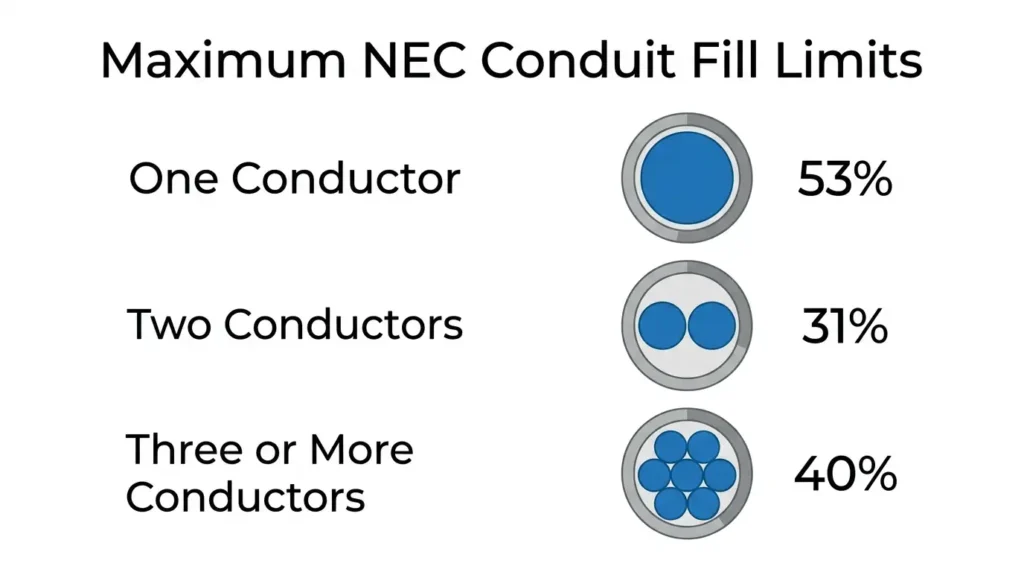
The NEC specifies maximum conduit fill percentages depending on how many conductors are inside the conduit.
| Number of Conductors | Maximum Fill |
|---|---|
| 1 Conductor | 53% |
| 2 Conductors | 31% |
| 3 or More Conductors | 40% |
These limits help ensure there is enough free space for heat dissipation and conductor installation. The 40% rule is the one electricians encounter most often because many conduit runs contain three or more conductors.
How Is Conduit Fill Calculated?
A conduit fill calculation generally follows these steps:
- Determine the conductor type and insulation.
- Find the conductor’s cross-sectional area.
- Add the area of all conductors in the conduit.
- Determine the conduit’s internal cross-sectional area.
- Compare the total conductor area with the allowable conduit fill percentage.
Although the calculation sounds simple, different conductor types, insulation, conduit materials, and NEC tables make manual calculations time-consuming. That’s why many professionals use a dedicated calculator instead of performing the math by hand.
What Affects Conduit Fill?
Several factors influence the final conduit fill calculation.
These include:
- Conduit type (EMT, PVC, RMC, IMC, etc.)
- Trade size
- Number of conductors
- Wire size (AWG or kcmil)
- Conductor insulation type
- Copper or aluminum conductors
- NEC fill requirements
Changing any one of these values can change the required conduit size.
Example Conduit Fill Calculation
Imagine you need to install:
- Three 12 AWG THHN copper conductors
- One EMT conduit
The total conductor area is calculated using the appropriate NEC tables and compared with the conduit’s available internal area. If the result stays within the allowable fill percentage, the conduit size is acceptable. Otherwise, a larger conduit must be selected.
Instead of manually checking multiple tables, most electricians use a calculator to perform these calculations in seconds.
Common Conduit Fill Mistakes
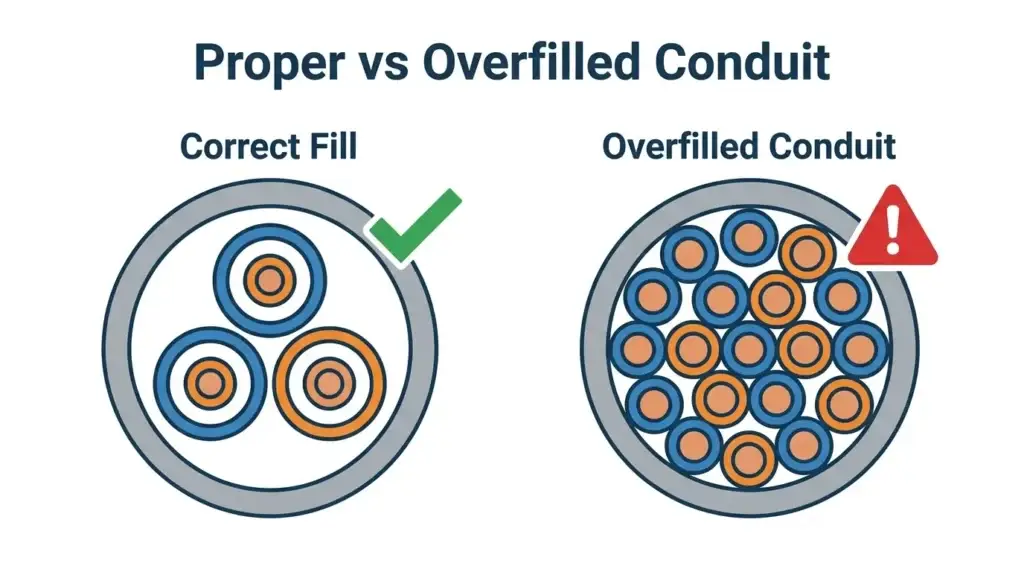
Many installation problems happen because of simple mistakes.
Common examples include:
- Choosing the wrong conduit type
- Using incorrect conductor insulation
- Forgetting to count all conductors
- Guessing conduit size instead of calculating
- Ignoring NEC fill limits
- Using outdated reference tables
Taking a few minutes to verify the calculation can prevent costly rework later.
How Our Conduit Fill Calculator Helps
Our calculator is designed to simplify conduit fill calculations while helping users make accurate decisions.
Features include:
- NEC-based calculations
- Support for multiple conduit types
- Various conductor insulation options
- Automatic fill percentage calculation
- Visual conduit fill diagram
- Mobile-friendly design
- Instant recommendations based on your selections
The goal is to reduce manual calculations and help users choose an appropriate conduit size with confidence.
Frequently Asked Questions
Conduit fill is the percentage of a conduit’s internal space occupied by electrical conductors.
Proper conduit fill improves safety, helps prevent overheating, protects wire insulation, and supports NEC compliance.
Yes. Different insulation types have different outside diameters, which directly affect conduit fill calculations.
The answer depends on the conduit type, conduit size, conductor size, insulation type, and applicable NEC limits.
Exceeding the allowable fill percentage is generally not recommended because it can create installation difficulties and may violate electrical code requirements.
Visit our FAQ page for answers to common conduit fill questions and practical guidance: https://conduitfilltool.com/faqs/
Conclusion
Conduit fill is one of the most important calculations in electrical installations. It helps ensure conductors are installed safely, makes wire pulling easier, and supports compliance with NEC requirements.
Whether you’re working on a residential, commercial, or industrial project, calculating conduit fill before installation can save time and prevent costly mistakes.
Using a reliable conduit fill calculator makes the process faster, easier, and more accurate, allowing you to focus on completing safe and efficient electrical installations.