
When planning an electrical installation, understanding NEC conduit fill rules is essential. These rules help electricians choose the correct conduit size, protect conductors from damage, and ensure installations meet National Electrical Code (NEC) requirements.
Whether you’re an electrician, contractor, engineer, apprentice, or DIY enthusiast, following the proper conduit fill rules can improve safety, simplify wire pulling, and help avoid costly code violations.
If you’re new to the topic, start by learning the basics in our guide: What Is Conduit Fill?
What Are NEC Conduit Fill Rules?
NEC conduit fill rules define how much of a conduit’s internal cross-sectional area can be occupied by electrical conductors. These limits are established to ensure conductors can be installed safely without excessive friction or heat buildup.
The rules are found in NEC Chapter 9, which provides guidance for calculating conduit fill using conductor dimensions and conduit sizes. Rather than filling a conduit completely, electricians must stay within the allowable fill percentage for the number of conductors being installed.
Why Does the NEC Limit Conduit Fill?

The NEC does not limit conduit fill simply to leave empty space. The extra room serves several important purposes.
Proper conduit fill helps:
- Reduce the risk of conductor overheating
- Protect insulation during wire pulling
- Make installations easier and faster
- Minimize conductor damage
- Allow easier maintenance or future upgrades
- Improve overall electrical safety
Overfilled conduits can make pulling wires extremely difficult and may damage conductor insulation, leading to costly repairs or failed inspections.
NEC Maximum Conduit Fill Percentages
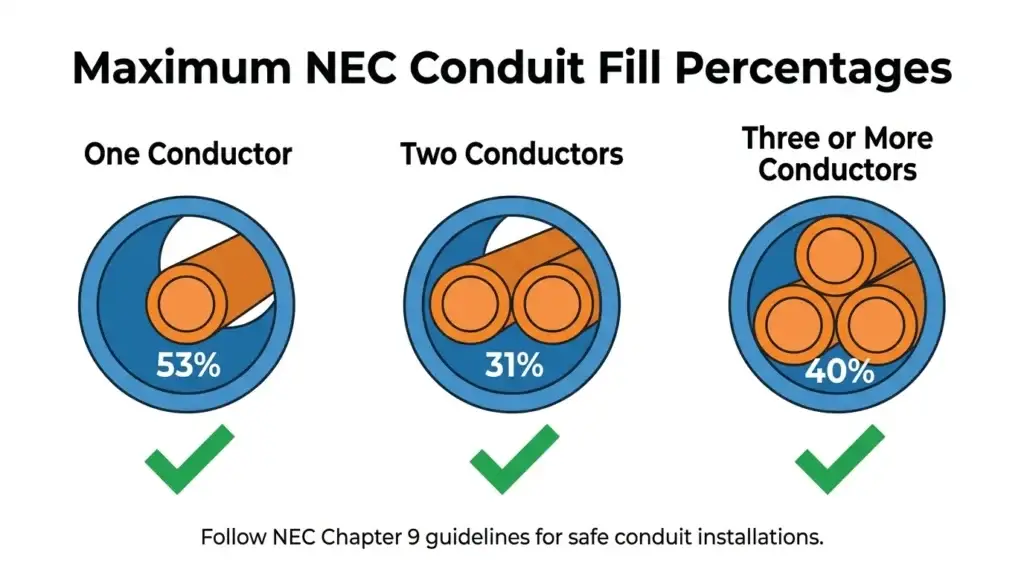
The allowable conduit fill depends on how many conductors are installed inside the raceway.
| Number of Conductors | Maximum Fill |
|---|---|
| One Conductor | 53% |
| Two Conductors | 31% |
| Three or More Conductors | 40% |
In most residential, commercial, and industrial installations, the 40% fill limit is the one electricians use most frequently because circuits commonly contain three or more conductors.
Where Are Conduit Fill Rules Found in the NEC?
Conduit fill requirements are primarily located in NEC Chapter 9.
Electricians typically reference:
- Chapter 9, Table 1 for allowable fill percentages
- Conduit dimension tables
- Conductor dimension tables
These resources work together to determine whether a group of conductors fits safely inside a selected conduit. Always consult the edition of the NEC that applies in your jurisdiction, as local code adoption may vary.
How to Apply NEC Conduit Fill Rules
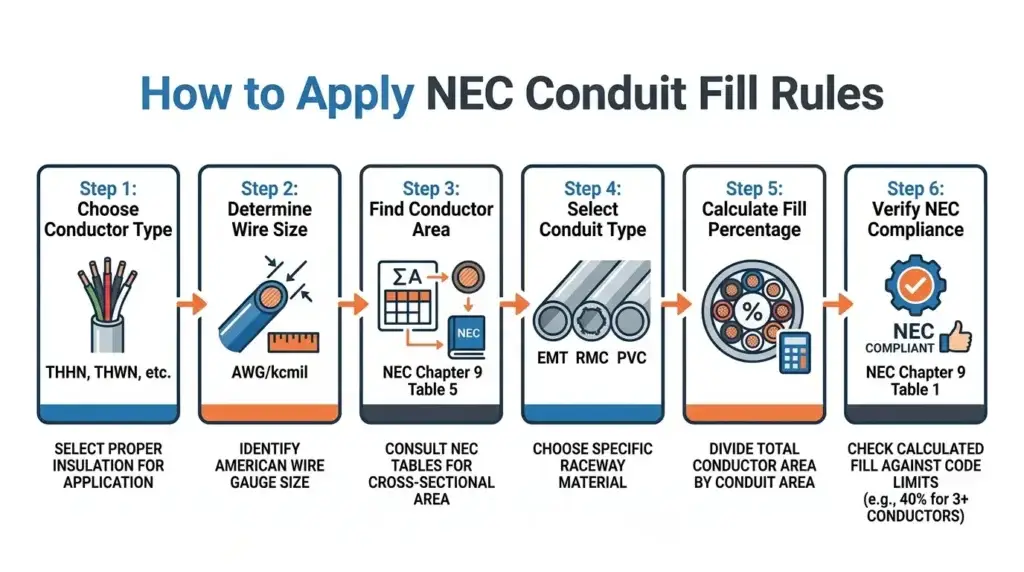
Following the NEC conduit fill process is straightforward.
- Identify the conductor type.
- Determine the conductor size.
- Find the conductor’s cross-sectional area.
- Select the conduit type.
- Determine the conduit’s internal area.
- Compare the total conductor area with the allowable fill percentage.
- Select a larger conduit if the fill exceeds the NEC limit.
Performing these calculations manually can take time, especially when multiple conductor sizes and conduit types are involved.
Factors That Affect Conduit Fill
Several variables influence the final conduit fill calculation.
These include:
- Number of conductors
- Wire size (AWG or kcmil)
- Conductor insulation type
- Conduit material
- Trade size
- Copper or aluminum conductors
- Special installation conditions
Even a small change in conductor insulation or conduit type can affect the allowable fill and the required conduit size.
Common NEC Conduit Fill Mistakes
Many conduit fill errors happen because installers overlook small details.
Some of the most common mistakes include:
- Selecting the wrong conduit type
- Using incorrect insulation data
- Forgetting to include all conductors in the calculation
- Guessing conduit size instead of calculating
- Ignoring the applicable fill percentage
- Using outdated code references
Carefully checking your calculations before installation can help prevent expensive corrections later.
Example of Applying NEC Conduit Fill Rules
Suppose you’re installing four THHN conductors inside an EMT conduit.
The general process would be to determine the cross-sectional area of each conductor, calculate the total conductor area, find the internal area of the selected EMT conduit, and verify that the conductors remain within the allowable fill percentage.
If the calculated fill exceeds the NEC limit, the conduit must be upsized before installation.
How a Conduit Fill Calculator Helps
Manual conduit fill calculations often require switching between multiple NEC tables and performing several calculations.
Using an online calculator can make the process much faster by automatically determining:
- Fill percentage
- Minimum conduit size
- NEC compliance
- Recommended conduit selection
You can calculate conduit fill in seconds using our free Conduit Fill Calculator, which supports multiple conduit types and conductor configurations.
Frequently Asked Questions
In many jurisdictions, the NEC is adopted into law. However, always follow the electrical code requirements enforced by your local authority.
No. The NEC establishes maximum fill percentages to help ensure safe installation and reliable operation.
The 40% limit provides sufficient space for wire pulling and helps prevent conductor damage during installation.
Yes. Different conduit materials have different internal dimensions, so the allowable number of conductors may vary even if the trade size is the same.
The NEC is revised on a regular cycle, so electricians should use the edition adopted by their local jurisdiction.
Conclusion
Understanding NEC conduit fill rules is essential for designing safe and code-compliant electrical installations. By following the allowable fill percentages, selecting the correct conduit size, and considering conductor type and insulation, you can reduce installation problems and improve long-term system reliability.
Whether you’re planning a small residential project or a large commercial installation, taking the time to verify conduit fill before pulling conductors can save time, reduce costs, and help ensure compliance with NEC requirements.